
If you’ve ever opened Gmail and been greeted by the dreaded “Account storage full” warning, chances are you’ve blamed old emails, WhatsApp backups, or random files in Google Drive.
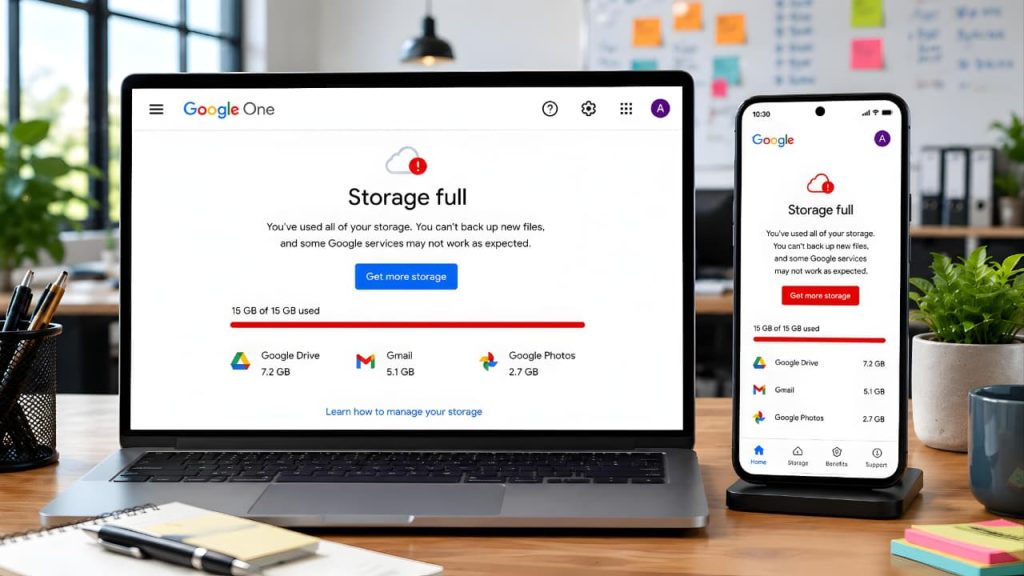
But for millions of Android users, the real culprit is hiding somewhere else entirely: Google Photos.
The frustrating part? Most people don’t realize they’re slowly running out of storage until it’s already too late.
Every Google account comes with 15GB of free storage, shared across Gmail, Google Drive and Google Photos. That might sound like a lot, but modern smartphones have quietly turned that space into a ticking time bomb.
A single photo taken on today’s flagship phones can easily occupy tens of megabytes when backed up in original quality. Multiply that by years of family photos, memes, screenshots, concert videos and random pictures of food you’ll never look at again, and suddenly Google starts asking for money.
The surprising part is that many people don’t even know Google Photos has different backup settings.
By default, many users end up storing photos and videos in higher quality formats that consume far more cloud storage than necessary. Meanwhile, Google offers a setting called Storage Saver, which compresses images and videos while preserving enough quality for everyday viewing and social sharing.
What to Do When Google Storage is Full

Changing the setting takes less than a minute:
- Open Google Photos
- Tap your profile picture
- Select Photos Settings
- Tap Backup
- Choose Photo and Video Quality
- Select Storage Saver
For most users, the difference in quality is barely noticeable, but the difference in storage consumption can be massive.
The reality is that cloud storage doesn’t usually fill up because of important files.
It fills up because of:
- Thousands of screenshots you forgot existed
- Fourteen versions of the same sunset photos in Kisii
- Accidentally recorded pocket videos
- WhatsApp memes from 2019
For many people, discovering the Storage Saver option feels less like finding a phone setting and more like discovering a hidden tax loophole.
Because let’s be honest: paying monthly cloud storage fees because you forgot to compress photos of your lunch from three years ago is a uniquely modern problem. It feels more like an intentional problem.
And it’s probably far more common than most of us would like to admit.