
Somewhere between scrolling TikTok at 2AM and ignoring your unread emails, you may have noticed it -that tiny blinking dot near the top of your Samsung screen.
And if you’re in Africa, there’s a high chance your first thought wasn’t “oh, proximity sensor.”
It was something closer to:
“So… who is watching me right now?”
It’s not spying. It’s just physics.
That little flashing dot is not a hidden government tracker, not a secret camera, and not your phone auditioning for Black Mirror.
It’s a proximity sensor.

In simple terms, it uses infrared light to detect how close your face is so your phone can do one basic job:
turn off the screen when you’re on a call so your cheek doesn’t accidentally start deleting contacts or sending “hi babes” texts to your boss.
That’s it. No drama. No conspiracy. Just engineering.
But why does it look suspicious?
Here’s where things get interesting.
On older phones, this sensor was hidden under bezels – invisible, quiet, minding its business.
Now? With full-screen “Infinity Displays,” Samsung had to move it under the screen. So every time it activates, you see a faint blinking dot.
And in a world where:
- ads suddenly “listen” to your conversations (allegedly)
- data bundles finish mysteriously fast
- your phone heats up like it’s mining Bitcoin
That tiny blinking light feels… personal.
Like it knows something.
The African context: where tech meets intuition
Let’s be honest – African users are some of the most tech-aware and conspiracy-sensitive users on the planet.
Not because people are paranoid for no reason, but because:
- we’ve seen real surveillance stories before
- we’ve dealt with data scams and shady apps
- and we’ve learned that sometimes, tech companies do things first and explain later
So when a phone suddenly flashes a hidden light while you’re alone in your room, the brain doesn’t say “sensor calibration.”
It says:
“Why is my phone blinking like it’s trying to communicate in Morse code?”
The irony: it’s actually protecting you
The funny part is that the same feature people fear is actually designed for privacy.
Without the proximity sensor:
- you’d mute yourself mid-call with your cheek
- you’d hang up on important calls
- you’d open your camera and accidentally start recording your forehead
So technically, the blinking dot is your phone’s way of saying:
“Relax. I’ve got you.”
You can’t turn it off (and that’s intentional)
Samsung doesn’t allow users to disable it.
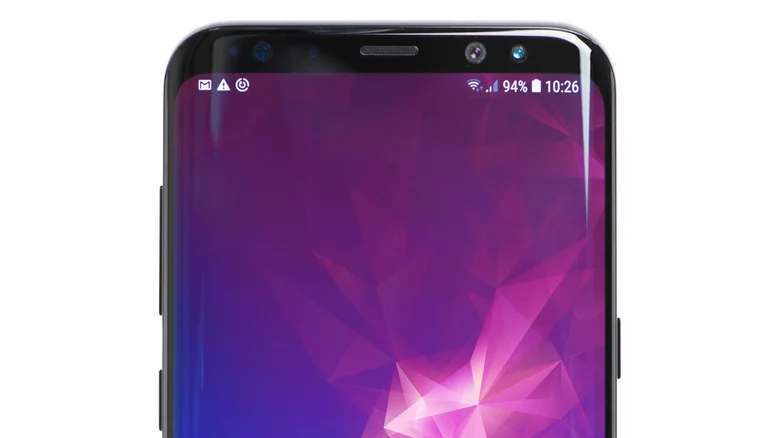
Not because they enjoy watching people panic, but because the sensor is tied to core functions like:
- call detection
- screen lock behavior
- accidental touch prevention
Turn it off, and your phone basically forgets how to behave like a phone.